About All Tours 3 Days From Marrakech4 Days From Marrakech2 Days From Marrakech3-Day From Fes ToursFrom Marrakech ToursFrom Fes ToursQuad Biking Tours4x4 ToursCamel Trekking Tours Directions Hours & Fees
Find Tours 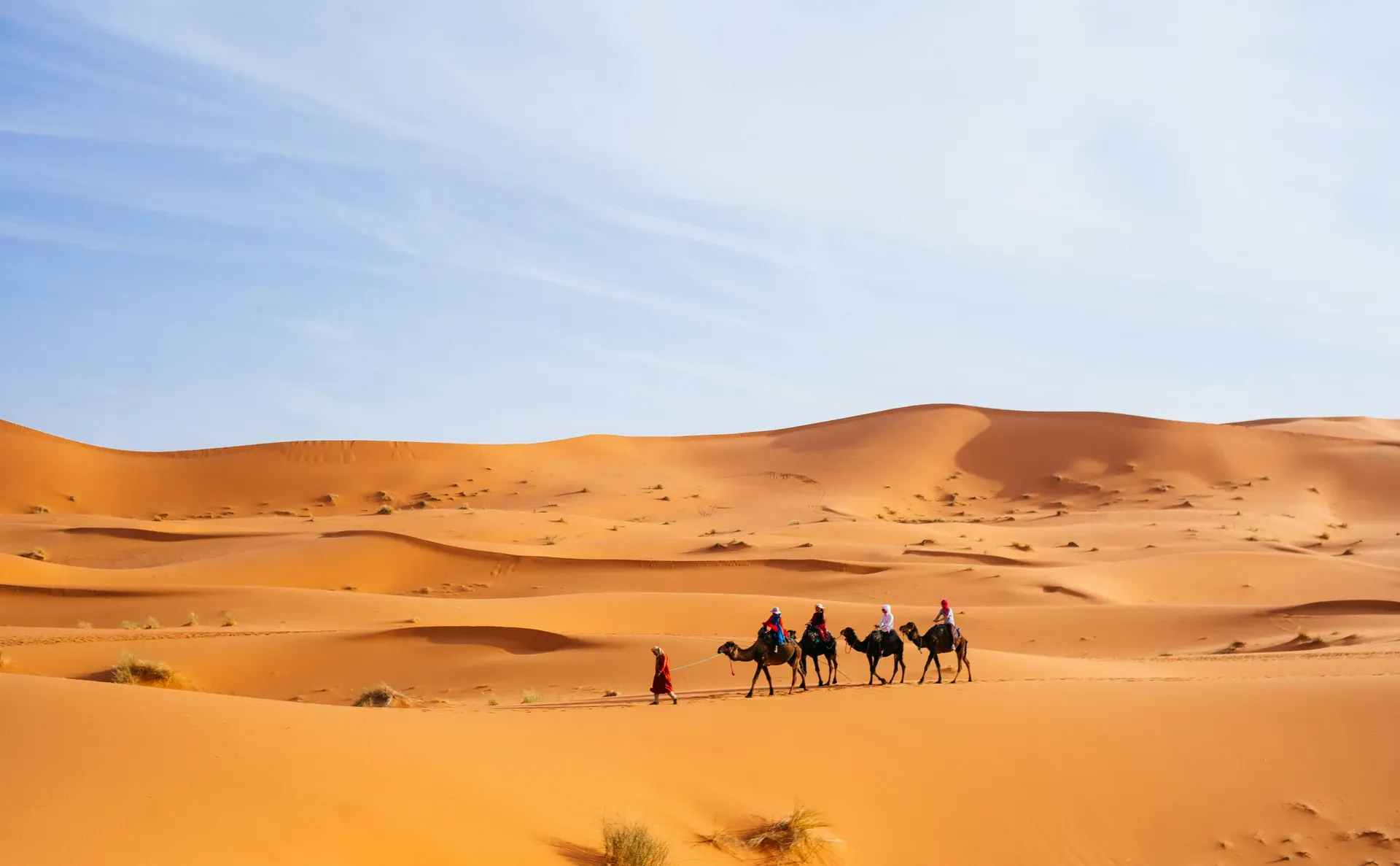
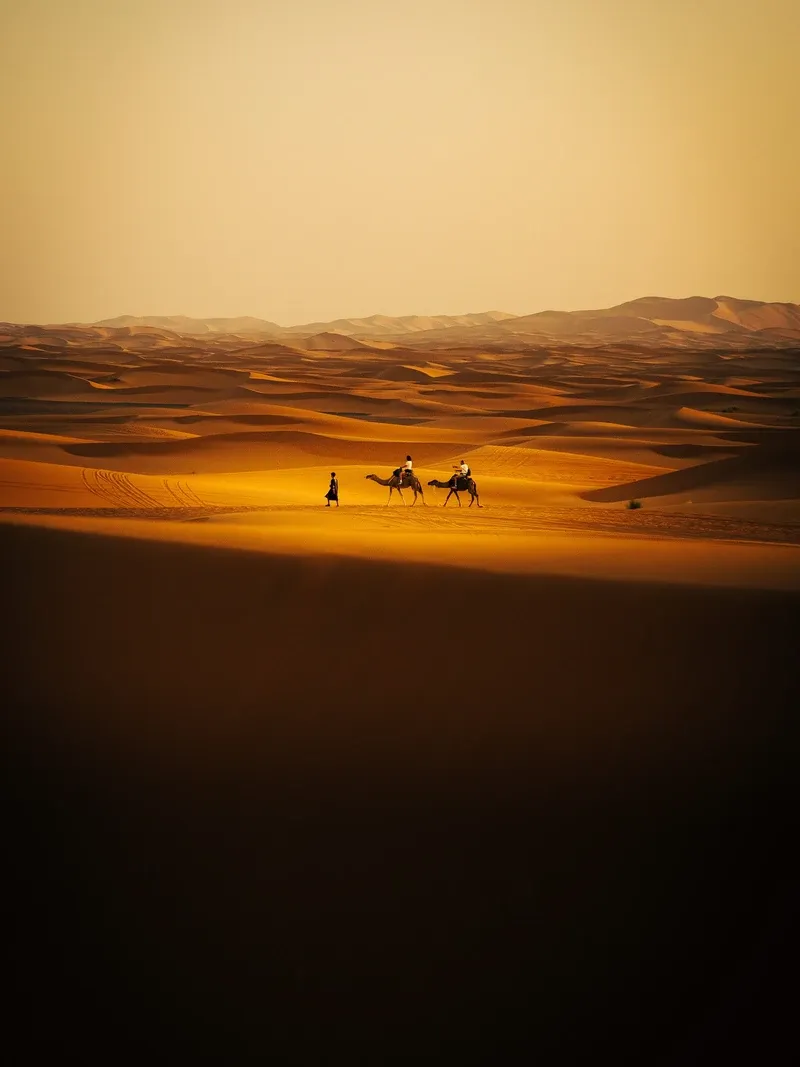
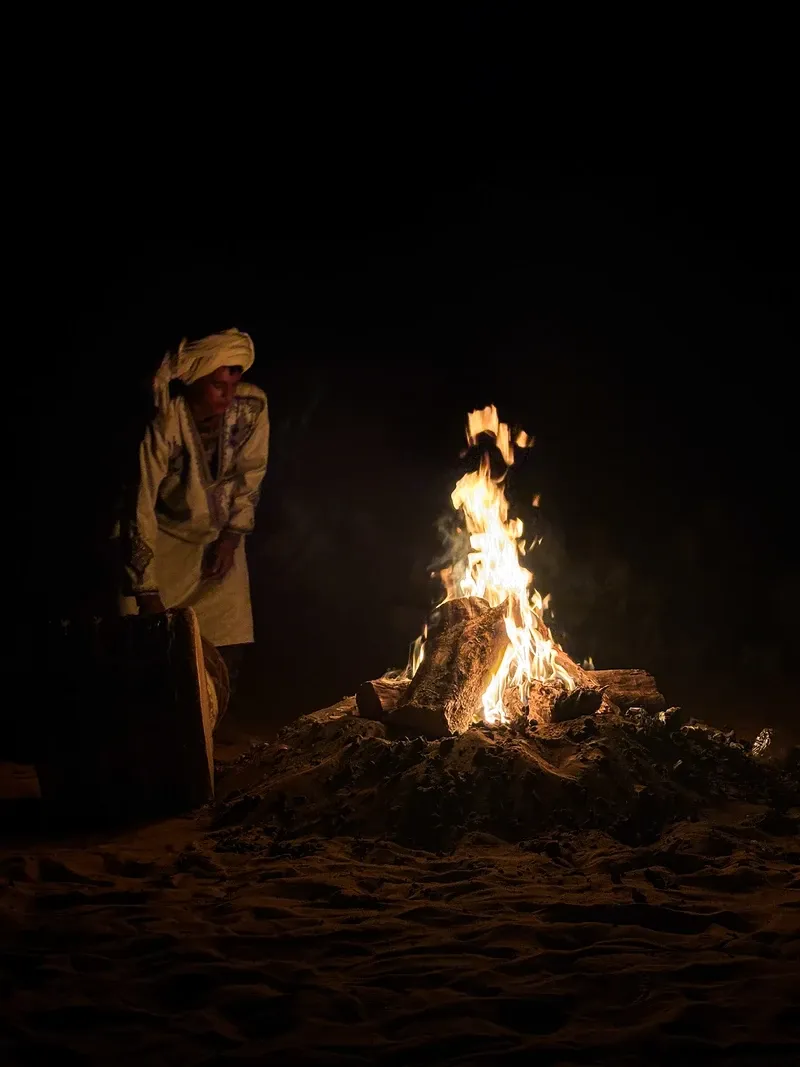
Situated on the edge of the 22-kilometer Erg Chebbi dune field, the Merzouga Desert serves as the primary base for exploring 150-meter-high orange-gold sand formations. Visitors ride camels into the deep Sahara at sunset, listen to traditional Gnawa music in nearby Khamlia, and sleep under clear skies in Berber goat-hair tents.
Find Guided ToursMerzouga is a remote village of 1,500 residents in southeastern Morocco's Drâa-Tafilalet region. Situated at an average elevation of 750 meters, it sits just 35 kilometers from the Algerian border. The settlement functions as the country's primary gateway to the Sahara Desert, blending modern tourism infrastructure with traditional Berber culture.
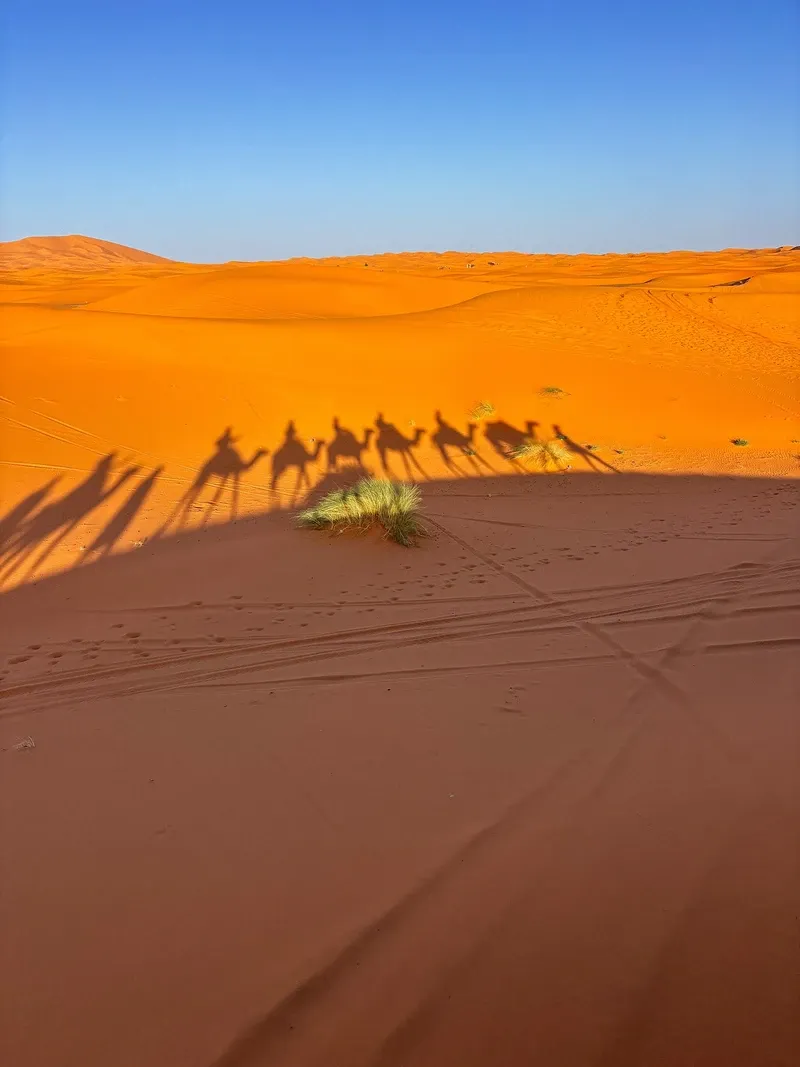
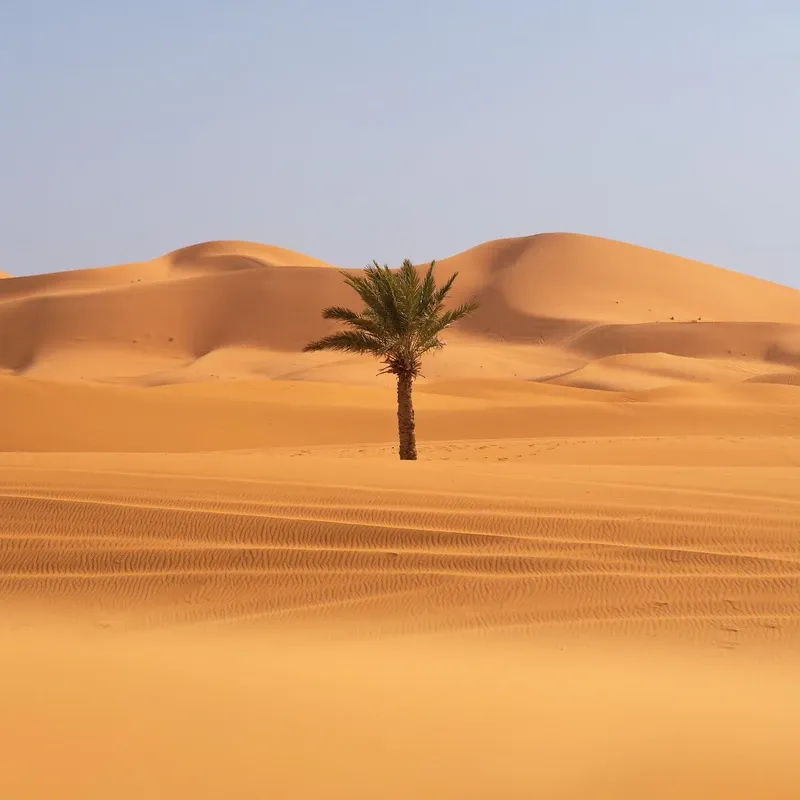
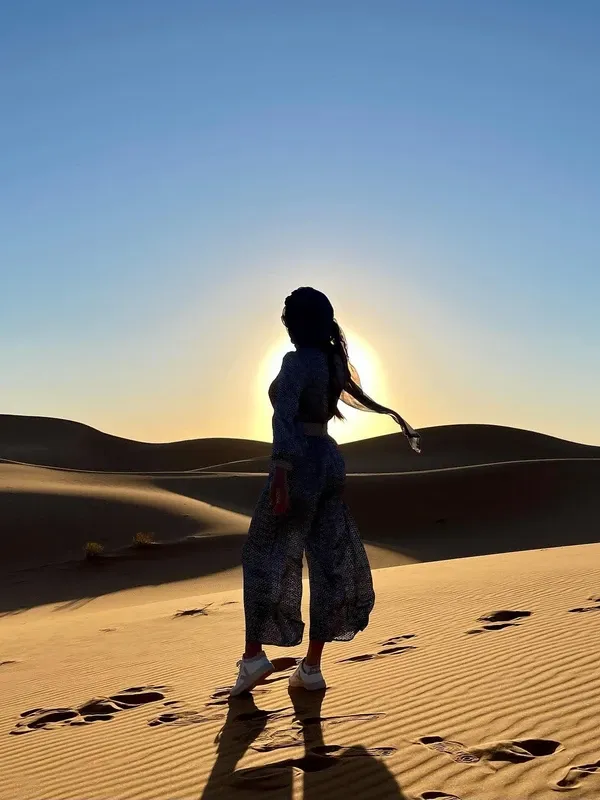
The village borders Erg Chebbi, a massive field of wind-blown sand dunes spanning 22 kilometers from north to south and reaching up to 7 kilometers wide. These orange-gold dunes shift in color as the sun moves across the sky, with the highest peaks rising 150 meters above the desert floor. This distinct sea of sand makes Merzouga the premier location for Saharan excursions, including camel treks and off-road driving.
According to local folklore, the towering dunes of Erg Chebbi were not formed by wind alone. The legend claims God sent the sands as a punishment to bury a wealthy local family after they refused hospitality to a poor woman and her child.
Beyond oral tradition, Merzouga holds genuine historical importance as a former transit point for trans-Saharan trade. Caravans once passed through the area carrying salt, gold, and spices between Timbuktu and the Mediterranean. During the French colonial era from 1916 to 1932, the French Foreign Legion built fortifications in the region following the battles of Tafilalet. More recently, the village faced severe natural challenges, notably in May 2006 when rare flash floods destroyed numerous traditional adobe buildings.
Discover the full history and cultural significance on our About page.
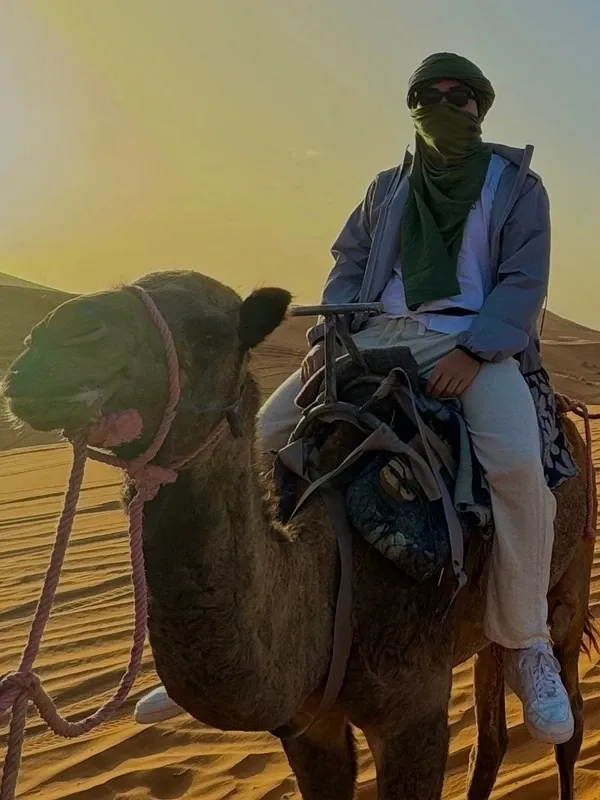
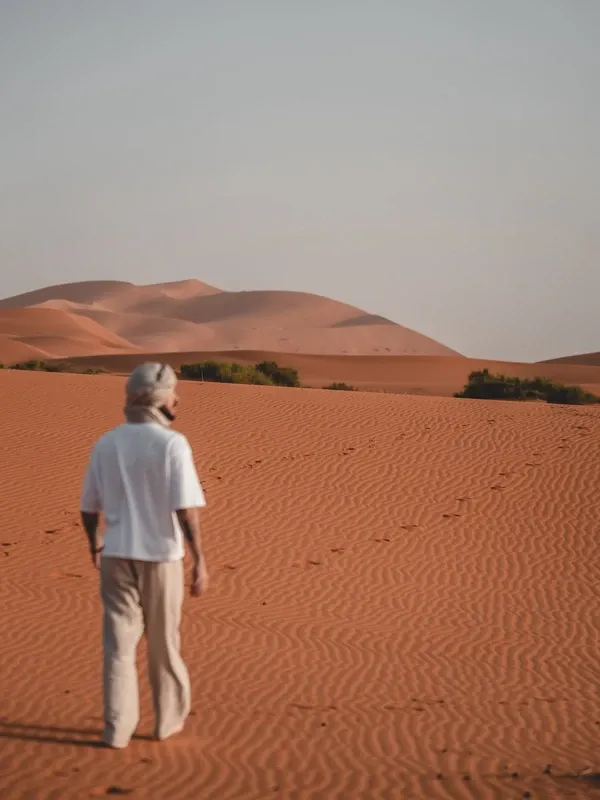
Ride deep into the Erg Chebbi dune field on a guided one- to two-hour camel trek. As the sun sets, the sand shifts in color from orange-gold to deep red. These massive dunes reach heights up to 150 meters. Wear long trousers and a cotton shesh to block wind-blown sand.
Sleep under the clearest skies in a traditional Berber goat-hair tent or a luxury camp with en-suite flushing toilets. The lack of light pollution makes the Milky Way clearly visible. Pack a heavy jacket for winter, as night temperatures drop to 0°C–5°C after sunset.
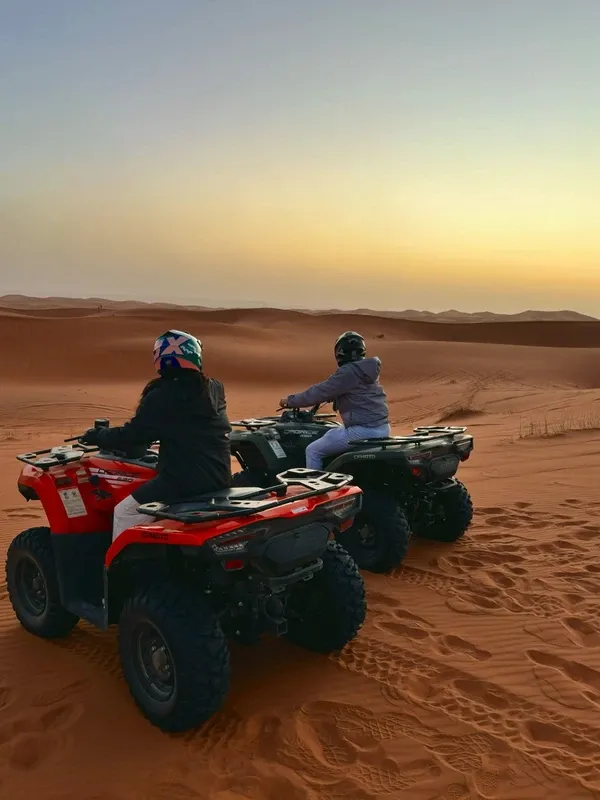
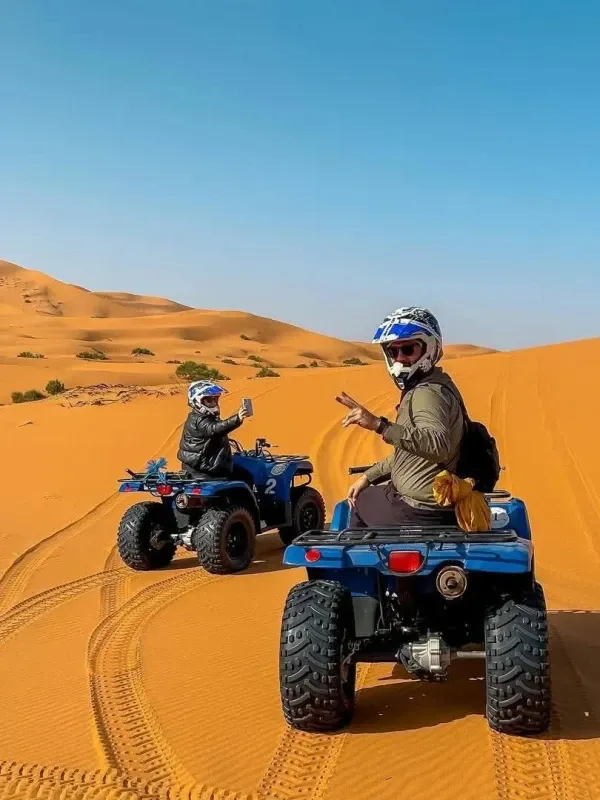
Navigate the 22-kilometer length and 7-kilometer width of the Erg Chebbi dune field in a 4x4 vehicle. These off-road circuits circumnavigate the massive sand formations, stopping to visit local nomadic families and nearby fossil sites. Visitors can also slide down the steep dune faces on modified sandboards.
Just 15 minutes from Merzouga lies Khamlia, the cultural center for traditional Gnawa music. Descendants of formerly enslaved people from sub-Saharan Africa perform these spiritual rhythms. This small settlement provides a direct look into local history and the unique cultural heritage of the Moroccan Sahara.
Hand-picked tours with free cancellation and verified reviews
 Free Cancellation 72h
  Free Cancellation 48h
  Free Cancellation 48h
  1h
1h  Free Cancellation 24h 20min
  Free Cancellation 72h
  Free Cancellation
  Free Cancellation 20h
 The optimal window for visiting Merzouga is from October to April, when daytime temperatures hover between 15°C and 25°C. This period allows for safe outdoor activities, avoiding the dangerous extreme heat of the summer.
Temperatures remain mild, but travelers should prepare for frequent sandstorms in March and April. These storms can reduce visibility to zero, halting outdoor activities. Peak holidays require booking months ahead.
Extreme heat creates dangerous conditions, with temperatures regularly exceeding 50°C (122°F). Heatstroke is a severe risk. Desert entry is unsafe during the day, restricting activities strictly to dawn and dusk.
October marks the start of the prime season. Daytime temperatures settle into a comfortable 15°C to 25°C range, creating ideal conditions for extended camel treks and deep desert exploration.
Daylight hours offer pleasant weather for navigating the dunes. Nighttime brings a drastic shift, as temperatures often plummet to near freezing (0°C to 5°C), making heavy jackets essential for camping.
The Merzouga Desert and the adjacent Erg Chebbi dunes are open public spaces accessible 24 hours a day, seven days a week. While the area never officially closes, local operators typically schedule activities around sunrise (06:00) and sunset (18:00). Due to extreme heat exceeding 50°C (122°F) from June to August, daytime desert entry is dangerous and activities are restricted to very early morning or late evening. Sandstorms in March and April can also occasionally halt outdoor activities by reducing visibility to near zero.
| Category | Price |
|---|---|
| General Entry | Free |
No permits or tickets are required for general tourist entry. Visitors planning to stay in desert camps during peak periods, such as Easter or New Year's Eve, should book accommodations 4 to 5 months in advance. Professional photography and commercial filming require a specific permit from the Moroccan Cinematographic Center.
For complete schedules and ticket prices, visit our Hours & Fees page.
Merzouga is accessible by overland buses, private vehicle transfers, or a combination of domestic flights and local taxis. Travelers typically arrive from major hubs like Marrakech, Fes, or Casablanca, with total transit times ranging from four to twelve hours.
📍 Merzouga Village, Drâa-Tafilalet Region, Morocco
The Supratours bus provides a direct daily service from Marrakech to Merzouga. This 560-kilometer route navigates the High Atlas mountain passes, making the trip significantly longer than driving. The bus departs in the morning and arrives in the desert village at night. It is a reliable choice for independent travelers seeking a straightforward connection.
Hiring a private car is the most flexible way to cover the 470 kilometers between Fes and Merzouga. The route passes directly through the Middle Atlas mountains and the scenic Ziz Valley. Passengers can stop at various viewpoints along the way. This method reduces travel time compared to public transit while offering a more comfortable ride.
Travelers can fly from Casablanca to Moulay Ali Cherif Airport in Errachidia to skip the long overland routes. The airport is located 130 kilometers from the village. Upon landing, visitors must hire a grand taxi or arrange a private transfer for the final leg. This two-hour drive completes the fastest overall transit to the dunes.
The CTM bus runs from Fes but does not go all the way to Merzouga. It completes the 470-kilometer route by stopping in the nearby town of Rissani. Passengers must then hire a local taxi to travel the remaining 35 kilometers to the village. This requires a minor transfer but remains a budget-friendly overland alternative.
For detailed transport options and routes, visit our Directions page.
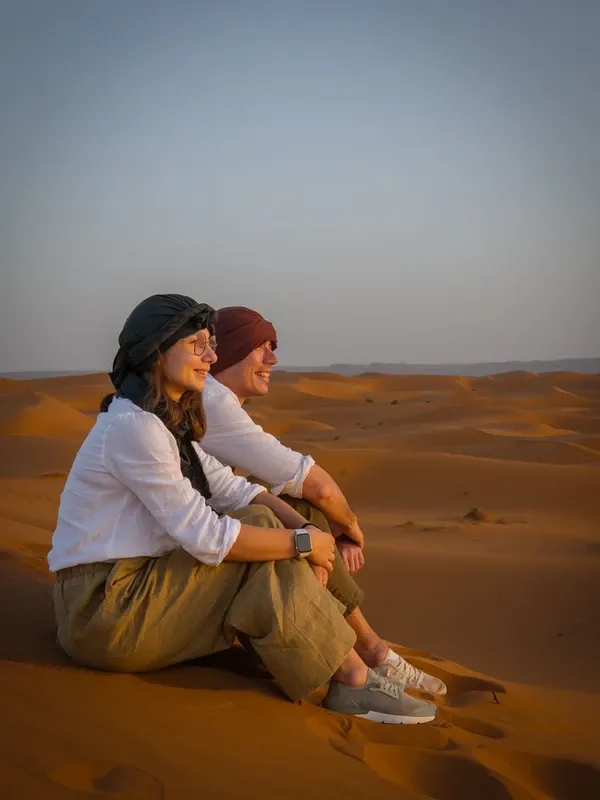
Purchase a traditional cotton turban, known as a shesh, before heading into the dunes. It blocks intense sun and wind-blown sand far better than a standard hat. Pair this with long trousers if you plan to ride a camel. This combination prevents painful skin chafing against the saddle.
Stock up on Moroccan Dirhams before arriving in the village. Merzouga has very few ATMs available for cash withdrawals. Furthermore, many local tour operators and small vendors do not accept credit cards. Having physical currency ensures you can easily pay for services without logistical headaches.
Electricity in the desert is entirely reliant on solar power. Even luxury glamping tents may have limited charging outlets available for guests. Bring a fully charged portable power bank to keep your electronics operational. You will need the battery life to capture the 150-meter-high dunes.
Daytime temperatures in the Sahara drop drastically after sunset. If you visit during the winter months of December through February, nighttime temperatures frequently fall to between 0°C and 5°C. Pack a heavy jacket and dress in layers. Standard camps use shared facilities, making warm clothing essential for evening movement.
Morocco maintains a strict nationwide ban on all recreational drones. Customs officials will confiscate these devices at the airport or border upon entry. Rely on standard cameras for your photography instead. When taking pictures in the village, always ask permission and strictly avoid photographing military or police installations.
Unofficial guides often approach tourists arriving at bus stations in Rissani or Merzouga. They will attempt to redirect you to their own overpriced or unverified desert camps. Pre-book your accommodation at least four to five months in advance for peak seasons. Arrange a direct transfer with your confirmed host.
This traditional souk operates as a central hub for regional livestock trading. Visitors travel here to observe the agricultural commerce and taste Madfouna, a local dish known as Berber Pizza.
This small settlement serves as the cultural center for traditional Gnawa spiritual music. The local musicians are descendants of formerly enslaved people from sub-Saharan Africa.
Known as the Fossil Capital of the World, this area contains 360-million-year-old marine fossils. Local workshops excavate and polish these ancient specimens directly from the surrounding desert rock.
Read what travelers share about their experience visiting Merzouga Desert — from practical tips to personal highlights.
You can take a direct Supratours bus from Marrakech to Merzouga. The 560-kilometer drive takes approximately 12 hours due to the High Atlas mountain passes, and tickets cost 250 MAD. The bus leaves in the morning and arrives at night.
The 470-kilometer route from Fes takes 7 to 9 hours by private car and costs around 1,500 MAD. You can also take a 10-hour CTM bus for 180 MAD, but it stops in Rissani. From there, you will need to take a local taxi for the final 35 kilometers to Merzouga.
Merzouga does not have its own airport, but you can fly from Casablanca to Moulay Ali Cherif Airport in Errachidia. The flight and the subsequent 130-kilometer transfer take 4 hours in total. This combined route costs approximately 800 MAD.
The ideal months to visit are between October and April when temperatures remain a manageable 15°C to 25°C. You should avoid traveling from June to August. During the summer, extreme daytime heat can exceed 50°C and make entering the desert dangerous.
There is no entrance fee to access the Erg Chebbi dunes, and the area is open 24/7. Most guided excursions are scheduled around sunrise at 06:00 or sunset at 18:00. You will only pay for specific activities, accommodations, or equipment rentals.
Wear long trousers to prevent chafing from the camel saddle and buy a traditional cotton turban in Merzouga to block sun and wind-blown sand. If you are visiting between December and February, pack a heavy jacket. Nighttime desert temperatures often drop to 0°C to 5°C after sunset.
The soft sand severely limits wheelchair mobility in the dunes. However, specialized tour operators provide 4x4 vehicle transfers directly to adapted desert camps. These specific camps are equipped with ramps and accessible facilities.
For a standard 2 to 3-day visit, booking a few weeks ahead is usually sufficient. If you plan to travel during peak periods like Easter or New Year's Eve, reserve your desert camp at least 4 to 5 months in advance. Avoid unofficial guides at bus stations who try to sell last-minute overpriced camps.
Browse verified tours with free cancellation and instant confirmation.
Find Tours