About All Tours 3 Days From Marrakech4 Days From Marrakech2 Days From Marrakech3-Day From Fes ToursFrom Marrakech ToursFrom Fes ToursQuad Biking Tours4x4 ToursCamel Trekking Tours Directions Hours & Fees
Find Tours 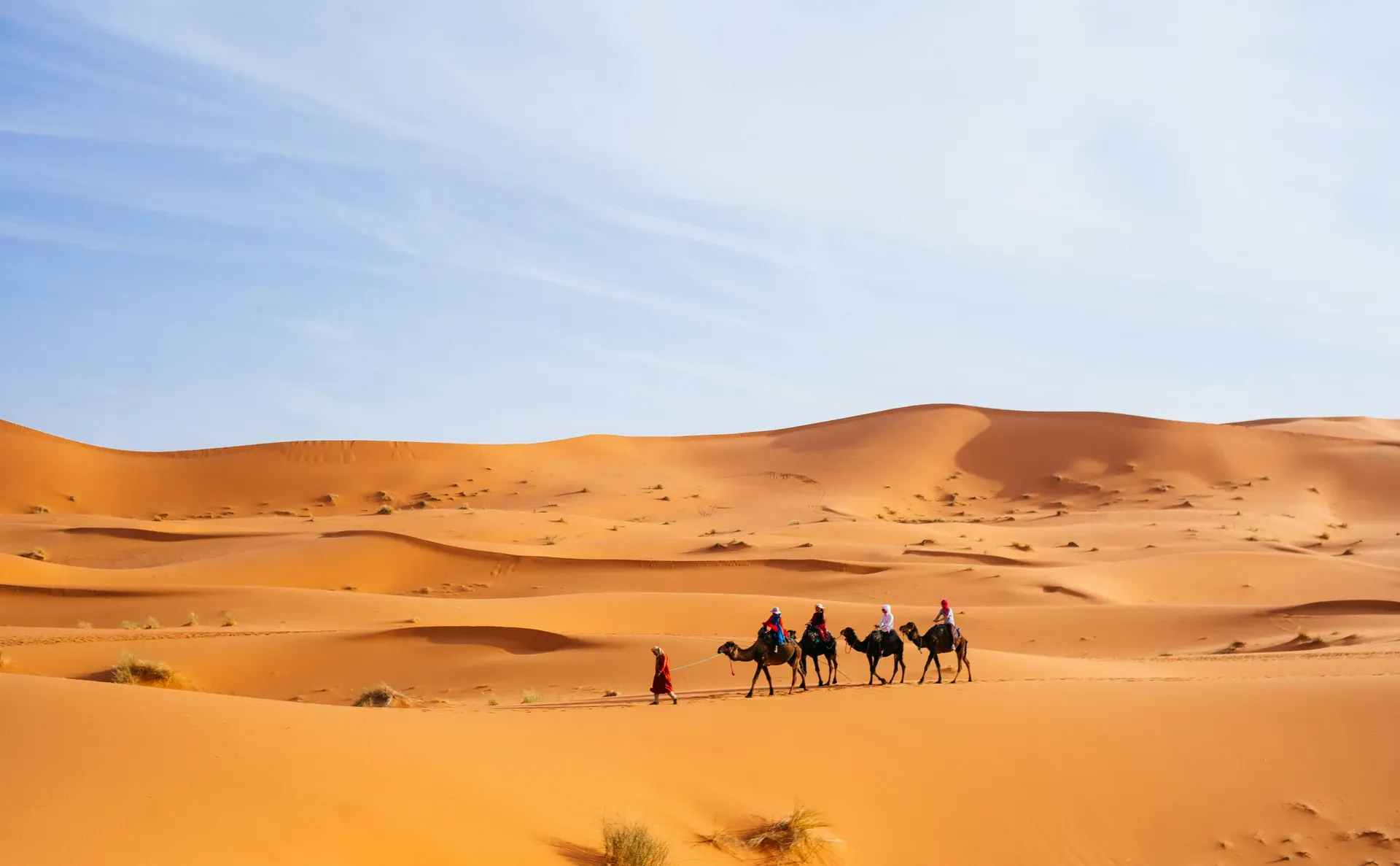
Merzouga is a remote Moroccan village sitting on the edge of the Erg Chebbi dune field. It acts as the primary access point for exploring 150-meter-high Saharan sand formations.
Merzouga sits 35 kilometers from the Algerian border, anchored against the western edge of the Erg Chebbi dune field. Orange-gold sand rises abruptly from the flat, black hammada (stony desert) to form peaks reaching 150 meters into the sky. The village houses 1,500 residents and functions as the primary staging ground for Saharan expeditions in southeastern Morocco. Dust coats the adobe buildings along the main street. Camels wait in lines near the asphalt's end, while 4x4 vehicles idle outside supply shops selling cotton turbans and bottled water.
Temperatures dictate daily life here. Summer heat regularly exceeds 50°C (122°F), making daytime desert entry dangerous and forcing locals indoors until dusk. Winter brings mild 15°C to 25°C days, followed by nights that drop near freezing. Visitors arrive after a 560-kilometer drive from Marrakech, crossing the High Atlas mountains to reach this remote outpost. The journey takes 12 hours by bus. Travelers coming from Fes face a 470-kilometer route through the Middle Atlas mountains and the massive palm groves of the Ziz Valley.
Sandstorms hit hard in March and April. High winds reduce visibility to zero, grounding all tours and forcing sand through tightly sealed windows. Travelers planning a visit during these months should book flexible itineraries. Supratours buses run daily directly to the village, dropping passengers off just as the sun sets over the dunes. Buy your return ticket immediately upon arrival, as outbound buses fill up days in advance during the October to April high season.
Merzouga began as a vital watering hole for trans-Saharan caravans. Traders moving gold, salt, and spices between Timbuktu and the Mediterranean stopped here to resupply before crossing the unforgiving stretches of the Sahara. The settlement grew around these temporary encampments, transitioning slowly from a transient outpost to a permanent village. Local oral traditions explain the formation of the massive Erg Chebbi dunes differently. Legends state God buried a wealthy local family under mountains of sand after they refused food and shelter to a poor woman and her child. Nomadic tribes continued to move freely across the region for centuries, ignoring borders that did not yet exist on maps.
French Foreign Legion troops arrived in the Drâa-Tafilalet region during the early 20th century. Following the fierce battles of Tafilalet, colonial forces established fortifications around Merzouga between 1916 and 1932. These garrisons aimed to control the nomadic tribes and secure the borderlands near French Algeria. Military outposts from this era still dot the surrounding landscape. The French presence formalized the borders and forced many nomadic groups to settle into permanent agricultural routines. Photographing these remaining military installations or modern police checkpoints remains strictly illegal today and will result in camera confiscation.
Tourism replaced trade as the primary economic driver in the late 20th century. Asphalt roads eventually connected Merzouga to Rissani and Erfoud, bringing a steady stream of international visitors. This shift prompted the construction of adobe hotels and desert camps along the dune line. Nature occasionally reclaims these developments. In May 2006, rare and severe flash floods swept through the dry riverbeds (wadis). The water destroyed dozens of traditional mud-brick homes and forced the community to rebuild further back from the flood zones. Travelers should never pitch tents in low-lying dry washes, as storms miles away can send walls of water through the desert without warning.
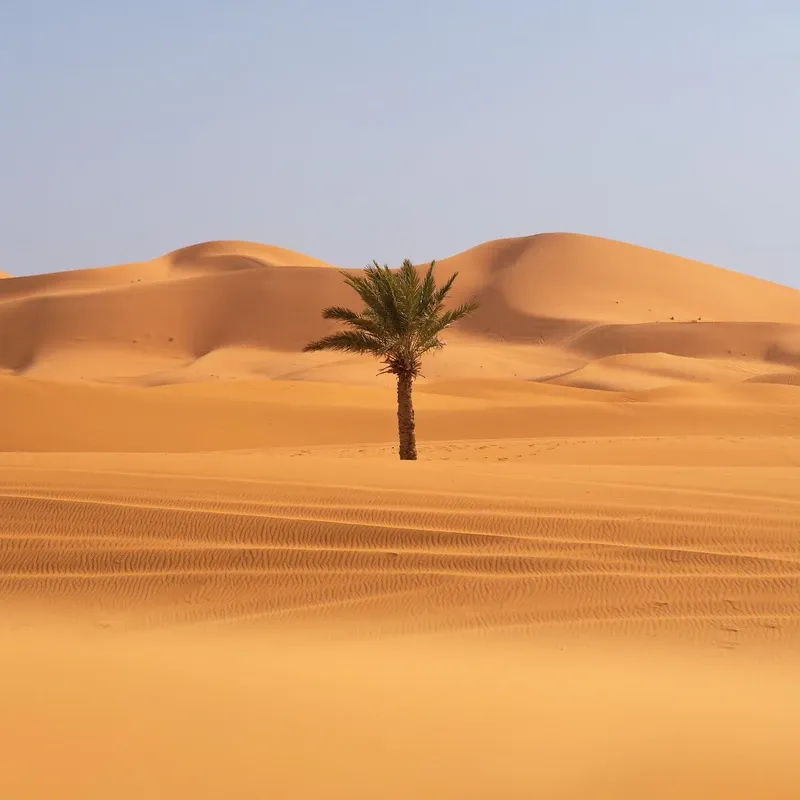
Erg Chebbi stretches 22 kilometers from north to south and spans 7 kilometers at its widest point. This massive sea of wind-blown sand covers an area of roughly 110 square kilometers. The dunes rise sharply from the surrounding flat, rocky plateau, peaking at heights of 150 meters. Wind constantly reshapes the ridges, erasing footprints within hours and altering the landscape's topography daily. The sand contains high concentrations of iron oxide, which gives the dunes their distinct orange-gold coloration. This color shifts to deep red during sunset and pale yellow under the midday sun.
Underground aquifers sustain life at the edges of the erg. These water sources feed small palm groves and seasonal bodies of water like Dayet Srji Lake. When water fills the lake basin, greater flamingos and other migratory birds gather in the thousands, creating a stark contrast against the arid backdrop. The desert floor surrounding the dunes holds 360-million-year-old marine fossils, a remnant of the prehistoric ocean that once covered North Africa. Workshops in Erfoud, one hour away, excavate and polish these ancient trilobites and ammonites.
Scorpions and horned vipers inhabit the dune grass and rocky outcrops. These creatures hunt at night and avoid the heavy foot traffic near tourist camps. The lack of ambient light in this remote region reveals the Milky Way clearly to the naked eye on moonless nights. Stargazers should bring a portable power bank, as cold nighttime temperatures drain camera batteries quickly.
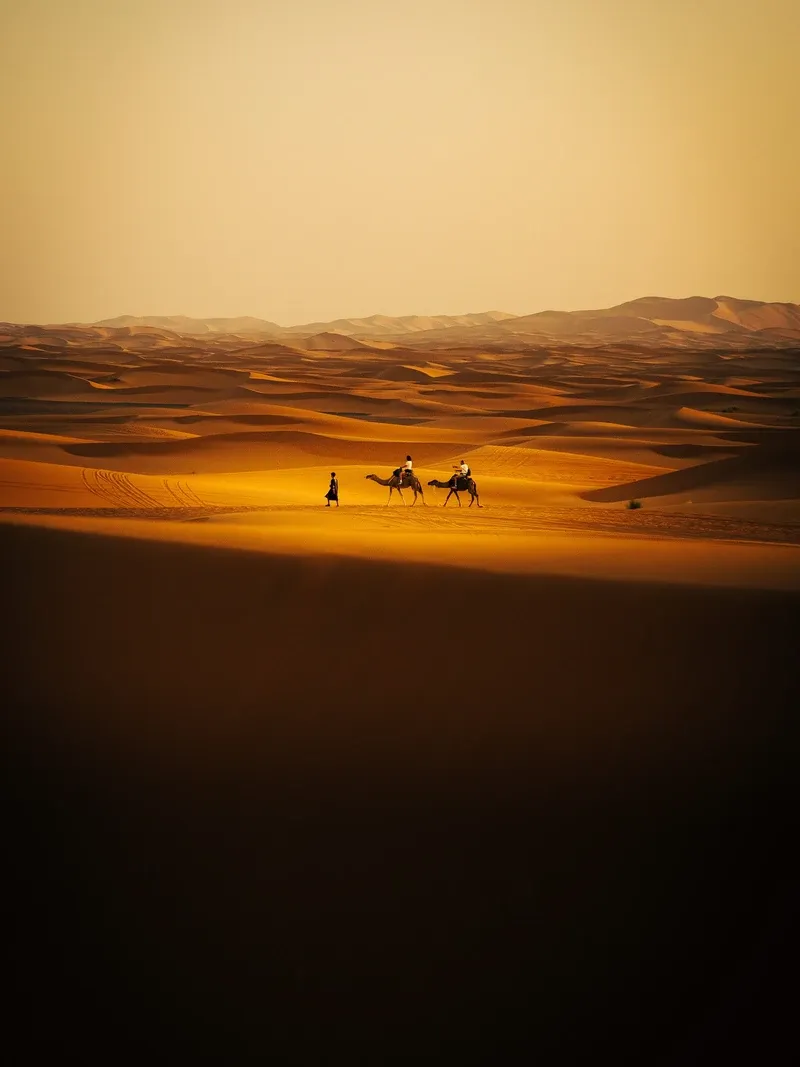
Merzouga functions as a living center for traditional Berber (Amazigh) and Gnawa culture. Nomadic families still traverse the fringes of Erg Chebbi, living in goat-hair tents and relying on camel herds for milk, meat, and transport. The village economy relies heavily on these ancestral skills. Local guides use their inherited knowledge of the shifting sands to navigate tourists through the dunes without GPS, reading wind patterns and star alignments. They lead 1 to 2-hour sunset camel treks deep into the erg, setting up camps before darkness falls.
Fifteen minutes from Merzouga lies Khamlia, a settlement founded by the descendants of formerly enslaved people from sub-Saharan Africa. This village stands as the cultural center of Gnawa music in the region. Musicians play the guembri (a three-stringed lute) and heavy iron castanets called krakebs, producing hypnotic, rhythmic sounds originally designed to induce trance states and heal spiritual ailments. Visitors sit on low cushions in mud-brick rooms to listen to these performances.
Food binds the community together. The nearby Rissani market, a 45-minute drive away, supplies the region with dates, spices, and livestock. Locals gather here to eat Madfouna, a traditional stuffed flatbread baked in the sand or communal ovens, commonly referred to as Berber Pizza. Travelers visiting the market should carry small denominations of Dirhams, as vendors rarely accept large bills or credit cards.
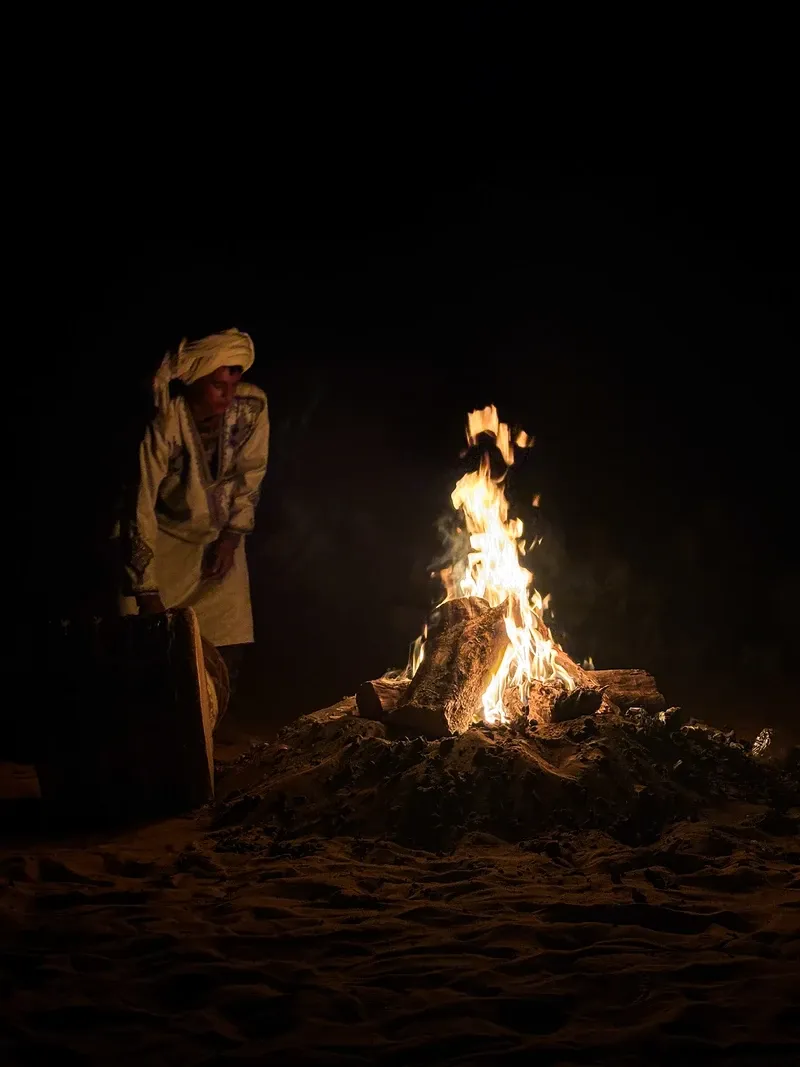
Drones are illegal for tourists in Morocco and will be confiscated by customs officials at the border.
Camel saddles are made of wood and thick blankets. Riders should wear long trousers to prevent severe skin chafing during treks.
Locals modify standard snowboards with hard wax to allow tourists to slide down the steep, 150-meter faces of the dunes.
The rocky desert floor surrounding Merzouga contains 360-million-year-old marine fossils, excavated and polished in nearby Erfoud.
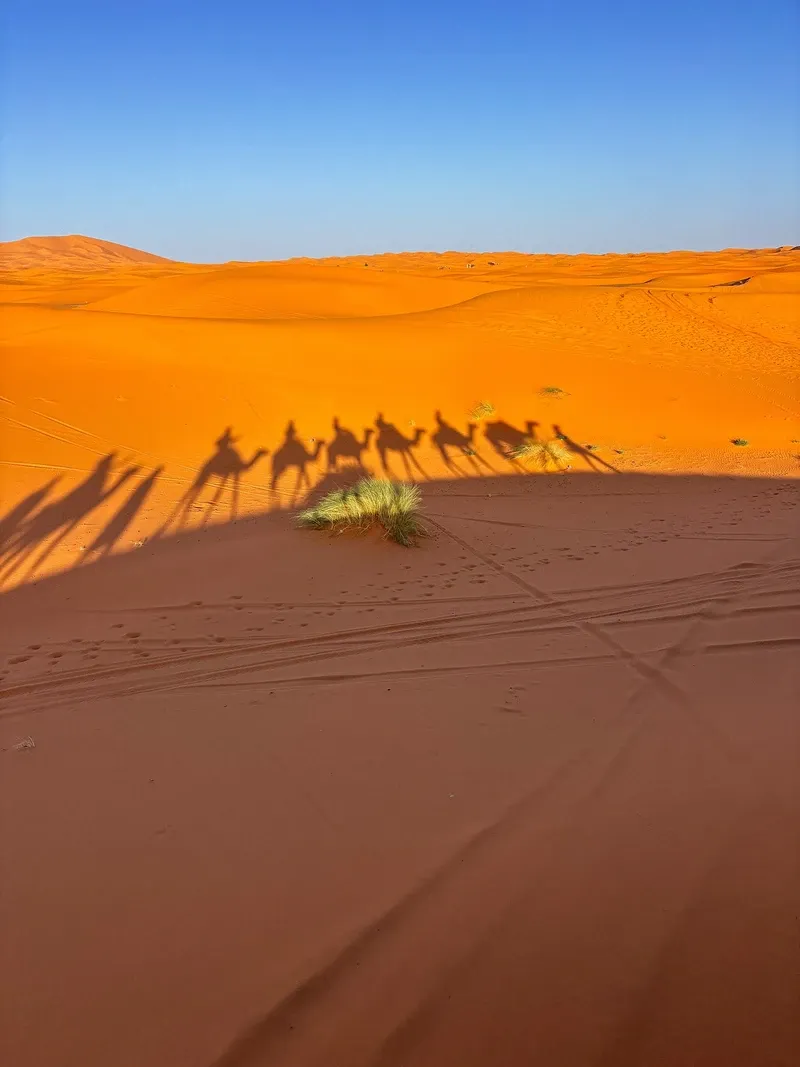
Desert temperatures plunge rapidly after sunset, frequently dropping to near freezing (0°C–5°C) during the winter months.
Public intoxication is illegal. Alcohol can only be consumed inside licensed hotels or private desert camps.
A traditional cotton turban (shesh) blocks sun and wind-blown sand far more effectively than a standard wide-brimmed hat.
Merzouga has a low crime rate and relies heavily on tourism. Solo visitors can navigate the village safely, though they should ignore unofficial guides at bus stations who push overpriced tours.
The journey covers 560 kilometers and takes 9 to 10 hours by private car. Supratours buses complete the route in 12 hours due to scheduled stops and winding High Atlas mountain passes.
You can travel directly to the village via public bus or rental car. Once there, you can book desert camps, camel treks, or hotel rooms independently without a pre-arranged package.
Scorpions and horned vipers live in the desert but actively avoid human noise and camp areas. They are most active during the extreme heat of summer and rarely seen by winter tourists.
October through April offers daytime temperatures between 15°C and 25°C. June through August brings dangerous heat exceeding 50°C, forcing activities to halt during the day.
Standard camps provide shared dry toilets. Luxury camps feature private en-suite flushing toilets and running water showers powered by solar energy.
Most hotels in Merzouga village offer Wi-Fi connections. Many luxury camps in the dunes also provide internet, though the signal frequently drops due to the remote location.
Soft sand makes wheelchairs impractical in the dunes themselves. Specialized operators bypass this by using 4x4 vehicles to transfer guests directly to accessible desert camps with ramps.
General photography requires no permits. Commercial filming requires approval from the Moroccan Cinematographic Center, and photographing military checkpoints is strictly illegal.
Wear long trousers to protect your legs from the rough wooden saddle. Bring layers for the sudden temperature drop at night and a cotton scarf to cover your face from blowing sand.
Browse verified tours with free cancellation and instant confirmation.
Find Tours