About All Tours3 Days From Marrakech4 Days From Marrakech2 Days From Marrakech3-Day From Fes ToursFrom Marrakech ToursFrom Fes ToursQuad Biking Tours4x4 ToursCamel Trekking Tours Directions Hours & Fees
Find Tours 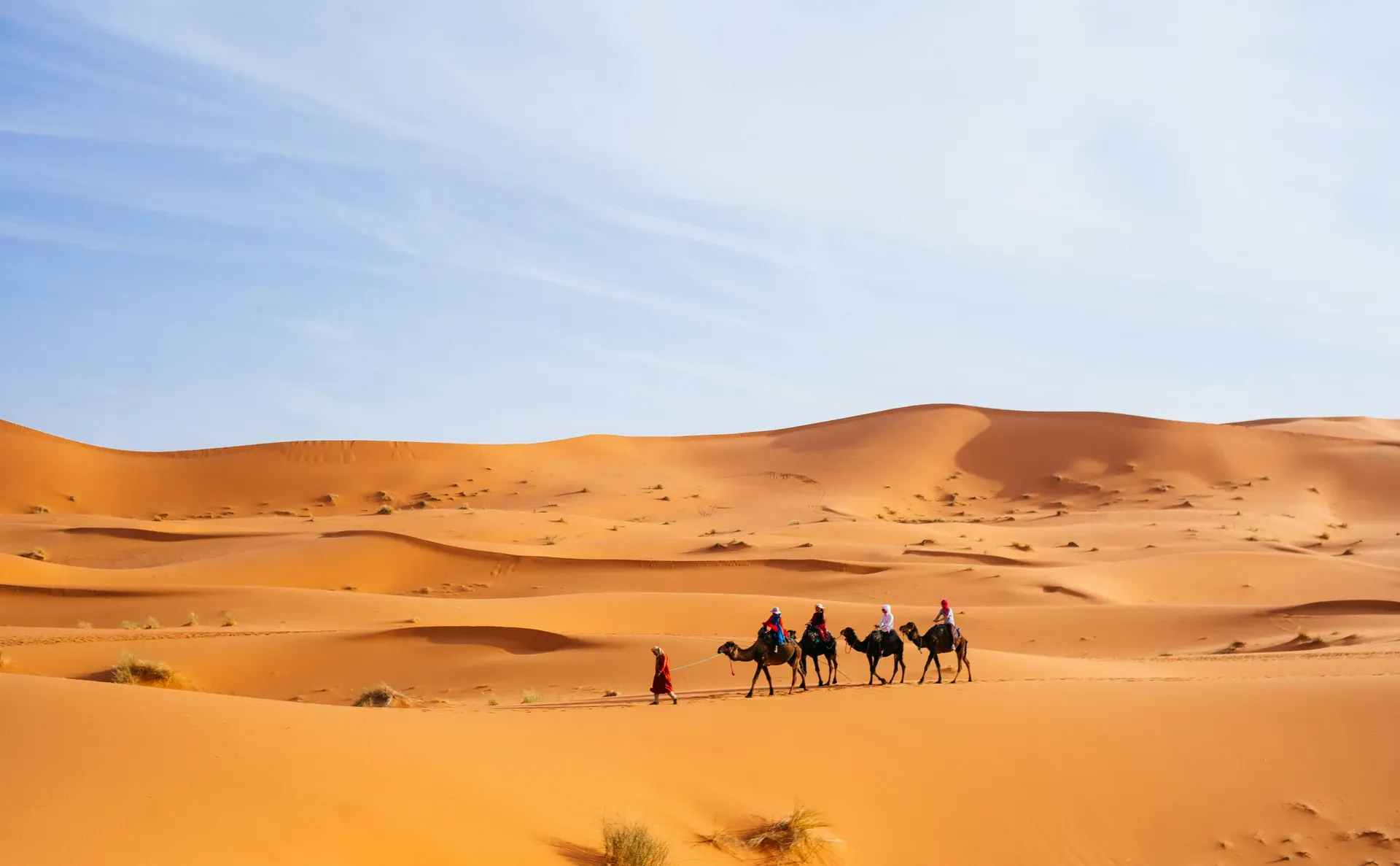
Travel from Marrakech to the Sahara on a three-day journey to the Merzouga Desert. These tours cross the High Atlas Mountains and include camel treks, stops at Ait Ben Haddou, and overnight stays in desert camps.
 Free Cancellation
 Journey from Marrakech to the Merzouga dunes, exploring ancient Kasbahs and camping under the stars in the Sahara.
 Free Cancellation
 A three-day trip from Marrakech to the Merzouga dunes, visiting Ait Ben Haddou and the High Atlas Mountains.
 Free Cancellation
 A three-day trip from Marrakech to the Merzouga dunes featuring camel treks and visits to historic desert villages.
 Free Cancellation
 Three-day desert trip from Marrakech featuring camel trekking in Erg Chebbi and a night in a traditional Berber camp.
 Free Cancellation
 Travel from Marrakech to the Merzouga dunes on a 3-day group trip via the Atlas Mountains and Ait Ben Haddou.
 Free Cancellation
 A three-day journey through the Dades Gorge to Merzouga, featuring luxury desert camping and sunset camel treks.
 Free Cancellation
 A 3-day group trip from Marrakech to Merzouga featuring Atlas Mountain views, camel trekking, and a desert camp stay.
 Free Cancellation
 A three-day journey from Marrakech to Fes via the High Atlas Mountains, Ait Ben Haddou, and the Merzouga desert.
 Free Cancellation
 A 3-day group tour from Marrakech to Merzouga featuring the High Atlas, Ait Ben Haddou, and Sahara desert camping.
 Free Cancellation
 Travel from Marrakech to the Sahara for a three-day trip through the Atlas Mountains and the dunes of Merzouga.
Read what travelers share about their experience visiting Merzouga Desert — from practical tips to personal highlights.
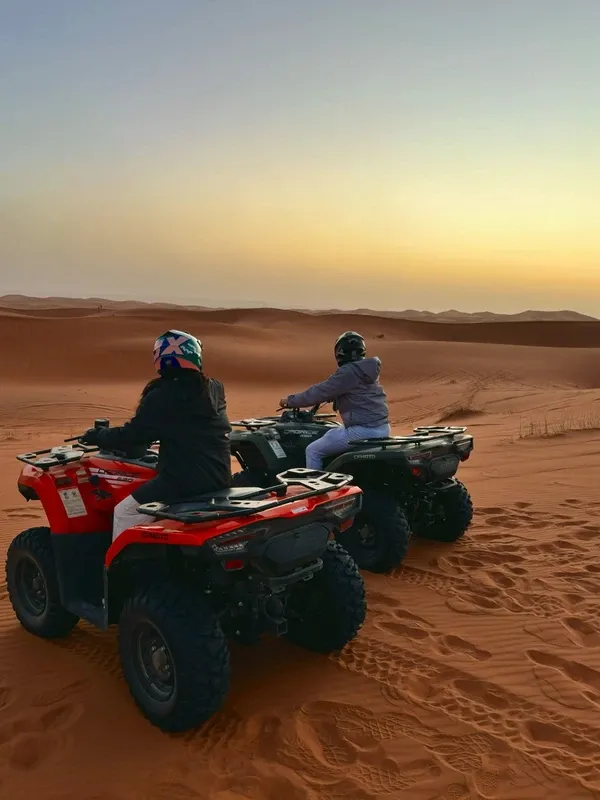
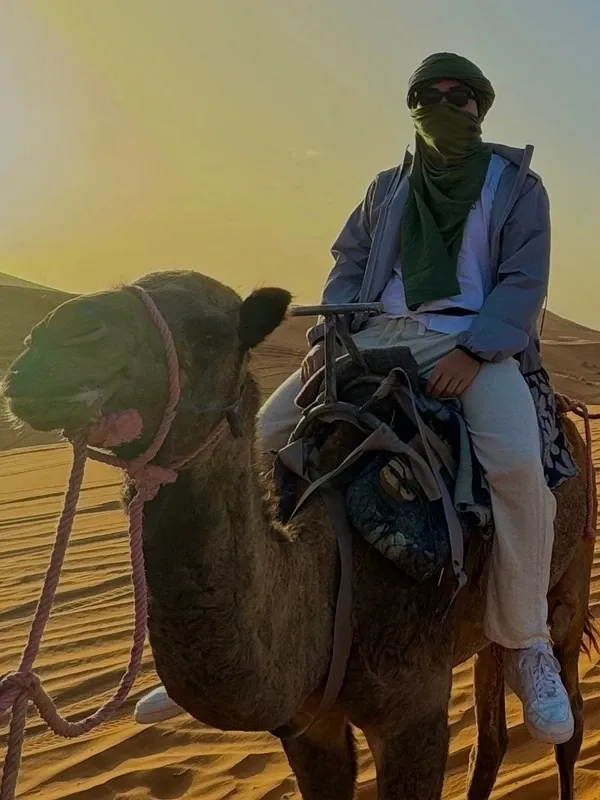
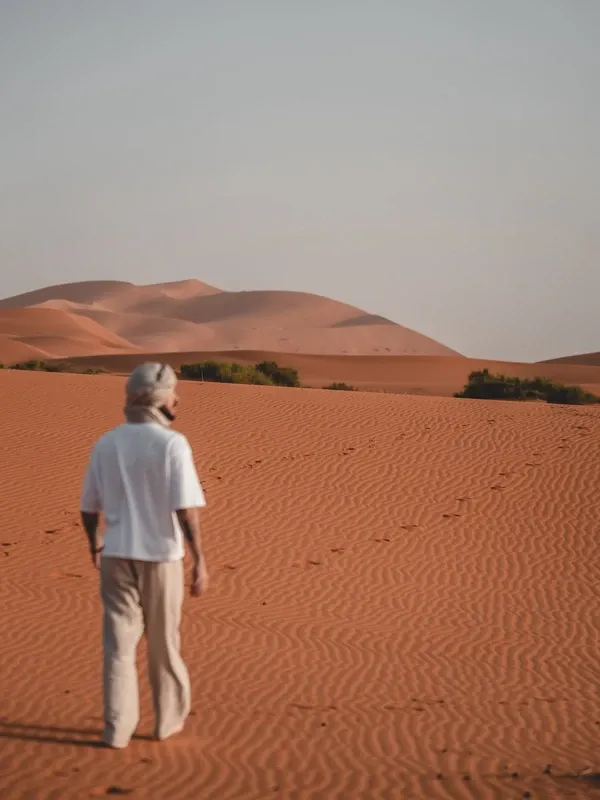
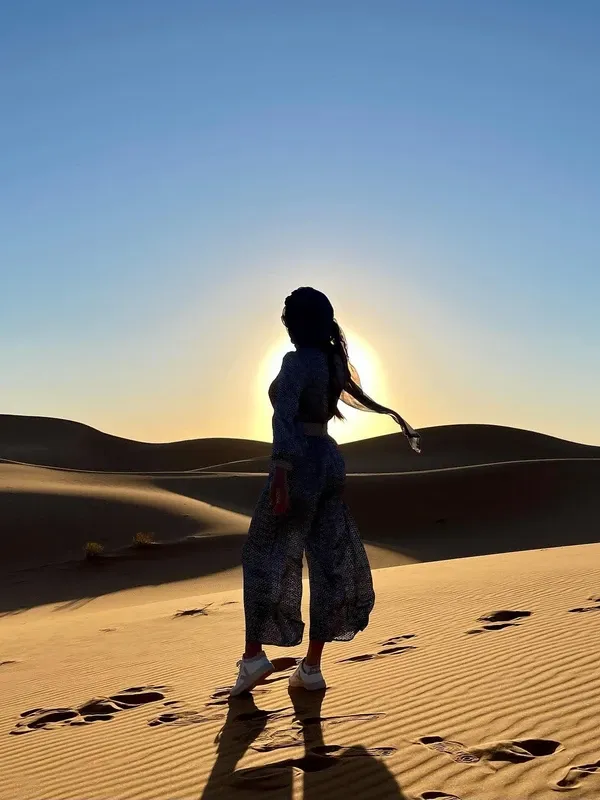
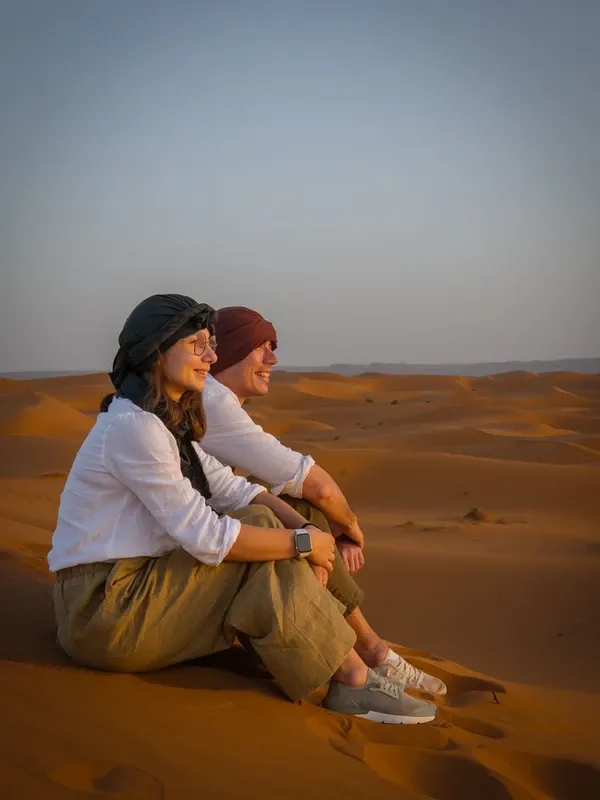
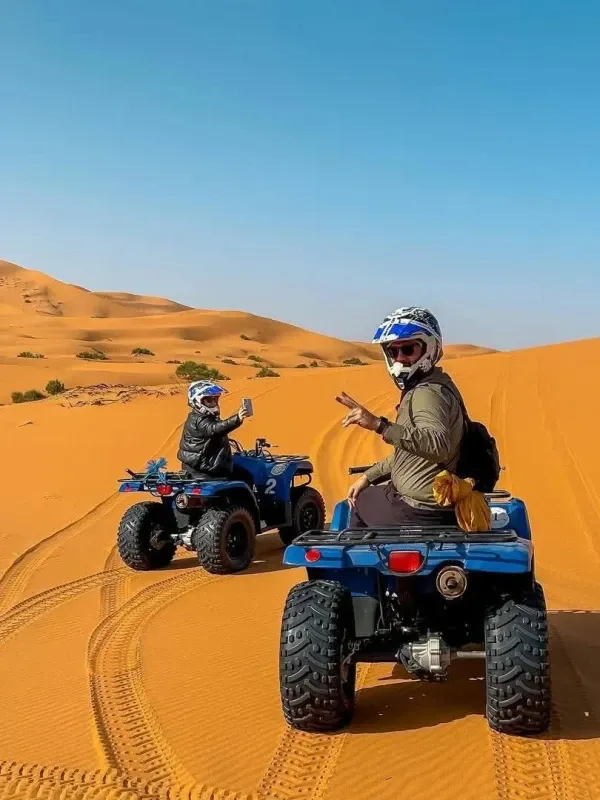
A tour from Marrakech to the Merzouga Desert is typically a multi-day adventure that takes you from bustling city streets across the dramatic High Atlas Mountains and deep into the Sahara. You will experience a massive shift in landscapes, transitioning from snowy mountain passes and lush palm oases to the towering, wind-swept dunes of Erg Chebbi.
Cross the famous Tizi n'Tichka pass and explore Ait Ben Haddou, a stunning UNESCO World Heritage fortified village used as a filming location for many Hollywood movies.
Walk through the towering limestone walls of the Todra Gorges and take in the panoramic views of the Dades Valley and its massive palm groves.
Ride a camel deep into the Erg Chebbi dune field—which spans 22 kilometers—just as the setting sun turns the sand a brilliant shade of deep red.
Spend the night under the stars in a traditional Berber goat-hair tent or a luxury glamping setup, complete with traditional dinners and campfire music.
Grab a modified snowboard and slide down the steep faces of Erg Chebbi's highest dunes, some of which reach up to 150 meters tall.
Traveling 560 kilometers from Marrakech to the deep Sahara requires a bit of planning. Here is what you need to know to choose the right Merzouga desert tour for your trip.
Because Merzouga is a 9 to 10-hour drive from Marrakech, almost all tours are 3 days and 2 nights. Attempting this trip in fewer days means spending nearly your entire vacation inside a vehicle.
Pay close attention to the camp type when booking. Standard camps usually feature shared dry toilets outside the tents, while luxury upgrades provide private, en-suite flushing toilets and hot showers.
Most multi-day tours include minibus transport, a driver/guide, hotel pickup, breakfasts, dinners, camel rides, and accommodation (one night in a hotel, one in the desert). Lunches, drinks, and guide tips are almost always excluded.
If you are traveling through Morocco, look for tours that start in Marrakech and end in Fes. These routes drop you off in Fes on the third day after your desert camp, saving you a return trip across the mountains.
You cannot take large suitcases on the camel trek. You will need to pack a small overnight backpack for the desert camp, while your main luggage stays securely locked in the tour minibus or at a staging hotel.
While you can often book standard tours a few weeks out, luxury desert camps sell out quickly. If you are traveling during peak seasons like Easter, Christmas, or New Year's Eve, book at least 4 to 5 months in advance.
Walking in soft dunes is physically demanding and not wheelchair friendly. However, you can skip the camel ride; many operators offer 4x4 jeep transfers directly to the camp if requested.
Most major tour operators offer flexible booking, allowing you to cancel for a full refund up to 24 hours before your scheduled departure time.
Swipe to see more
| Standard 3-Day Group Tour | Luxury 3-Day Desert Tour | Marrakech to Fes Transfer Tour | |
|---|---|---|---|
| Accommodation | 1 Hotel night + 1 Standard Camp (shared bath) | 1 Hotel night + 1 Luxury Camp (en-suite bath) | 1 Hotel night + 1 Desert Camp |
| Transport | Air-conditioned Minibus | Minibus & optional 4x4 desert transfer | Air-conditioned Minibus |
| Route | Marrakech to Merzouga & Return | Marrakech to Merzouga & Return | Marrakech to Merzouga, ending in Fes |
| Price Range | $107 - $130 | $178 - $237 | ~$190 |
Swipe to see more
The Merzouga Desert and the Erg Chebbi dunes are completely open to the public and accessible 24 hours a day, 7 days a week. There are no gates or official closing times.
However, tour activities are heavily scheduled around the sun to avoid the intense midday heat. Typical schedules include:
Nighttime is reserved for dinner, traditional Berber music around the campfire, and stargazing.
Merzouga is located in southeastern Morocco, approximately 560 kilometers from Marrakech. Because of the winding roads through the High Atlas Mountains, the drive takes 9 to 10 hours in a private vehicle or minibus.
Guided Tours: This is the most popular option. Tours include pickup directly from your Marrakech hotel or riad (or the closest accessible parking area) and handle all driving over the 3-day itinerary.
Public Transport: If traveling independently, the Supratours bus runs a direct daily route from Marrakech to Merzouga. The journey takes about 12 hours and costs roughly 250 MAD.
Flights: You can fly from Casablanca to Errachidia (Moulay Ali Cherif Airport), which is 130 km away, and then take a 2-hour taxi to Merzouga for around 800 MAD.
The ideal time to visit Merzouga is between October and April. During these months, daytime temperatures are mild and comfortable, ranging from 15°C to 25°C (59°F to 77°F), making it perfect for camel trekking and exploring the dunes.
Winter (December to February): Days are sunny and crisp, but nighttime temperatures in the desert drop drastically, often hovering near freezing (0°C to 5°C). You will need a heavy jacket and thermal layers for the evenings.
Spring (March to April): Generally beautiful, but be aware that sandstorms are common during this time and can occasionally reduce visibility to zero.
Summer (June to August): Visiting is highly discouraged. Daytime temperatures frequently exceed 50°C (122°F), making daytime desert entry dangerous due to the high risk of heatstroke.
The natural environment of Erg Chebbi presents significant mobility challenges. The soft, shifting sand makes wheelchair use in the dunes virtually impossible, and walking on the dunes is physically demanding for anyone with balance issues.
Despite this, the desert is still accessible. Many specialized tour operators offer 4x4 jeep transfers directly to the desert camps, completely bypassing the need to ride a camel or hike through the sand. Several luxury camps are equipped with ramps and accessible ground-floor facilities.
Children: Merzouga is highly suitable for kids. Children love the sandboarding and camel rides. Just ensure they are heavily protected from the sun and stay hydrated. Infants are generally required to sit on an adult's lap during transport.
Facilities in Merzouga vary wildly depending on whether you are in the village or deep in the dunes.
While Merzouga relies heavily on tourism, it is still a traditional Berber area, and local customs and national laws must be respected.
The drive is about 560 kilometers and takes 9 to 10 hours of pure driving time. Because of this distance, tours split the journey over multiple days, stopping at places like Ait Ben Haddou and the Dades Valley along the way.
Yes, Merzouga is very safe for solo travelers. The area has a low crime rate and the local economy is highly tourism-oriented. Joining a shared group tour is a great way for solo travelers to safely experience the desert.
It depends on the tour you book. Standard camps use shared dry toilets located outside the tents. If you book a luxury tour, your tent will have a private, en-suite bathroom with a flushing toilet and a shower.
Wear long, comfortable trousers to prevent chafing from the camel's saddle. It is also highly recommended to buy a traditional cotton turban (shesh) from a local vendor to protect your face and neck from the sun and wind-blown sand.
No. Drones are strictly banned in Morocco for tourists. If you attempt to bring one into the country, it will be confiscated by customs at the airport or border, and you could face penalties.
While it is possible, it is highly discouraged. From June to August, daytime temperatures in the Sahara can exceed 50°C (122°F), making daytime activities dangerous due to the risk of heatstroke.
They do exist in the Sahara, but tourists rarely see them. They are mostly active during the extreme heat of summer and generally avoid the noise and activity of the desert camps.
You should bring a fully charged portable power bank. While luxury camps often have solar-powered outlets in the tents, the voltage can be low, and standard camps usually have no charging facilities at all.
Yes. Because Merzouga is so remote, there is almost zero light pollution. On clear, moonless nights, the Milky Way and countless stars are easily visible to the naked eye.
Yes, you should bring plenty of Moroccan Dirhams. While your transport and accommodation are paid for, you will need cash for lunches, buying water, purchasing a turban, and tipping your drivers and camel guides.
Browse verified tours with free cancellation and instant confirmation.
Find Tours


This three-day excursion leaves Marrakech to cross the High Atlas Mountains via the Tizi n'Tichka pass. Along the route, you will visit the UNESCO World Heritage site of Ait Ben Haddou, an ancient fortified village, before continuing toward the Tinghir oasis and the towering rock walls of the Todra Gorges. Upon reaching Merzouga, you will head into the Erg Chebbi dunes on camelback to watch the sunset over the desert. The night is spent at a traditional Berber camp where you can try sandboarding and sleep in a desert tent. The experience concludes with a desert sunrise before the return journey through the southern Sahara landscapes.
For a full refund, cancel at least 24 hours before the scheduled departure time.
English, French, Spanish


This three-day journey from Marrakech to the Sahara focuses on the changing landscapes of southern Morocco. You will cross the High Atlas Mountains and visit the historic ksar of Ait Ben Haddou, a UNESCO World Heritage site, before continuing through the Todra Gorge. Travel is provided in air-conditioned vehicles with English-speaking driver-guides who manage the logistics and timing of each stop to ensure the trip does not feel rushed. In Merzouga, you will head into the Erg Chebbi dunes to spend the night at a desert camp. You can reach the camp via a sunset camel trek or a 4x4 transfer, which is included for those who prefer not to ride. The evening features traditional Berber music and dinner under the stars. For travelers wanting more activity, quad biking is available as an optional add-on. The tour concludes with a return to Marrakech, maintaining a small group size for a more organized and direct experience.
For a full refund, cancel at least 24 hours before the scheduled departure time.
Arabic, German, Portuguese, English, Italian, French, Dutch, Spanish


This three-day tour departs from Marrakech, traveling toward the remote Merzouga dunes in the Sahara. The itinerary includes stops at several historical sites, ancient villages, and oases where local Berber guides provide information about the region’s history and traditions. Once at the desert, the group travels by camel to a camp among the dunes, timed to coincide with the sunset and sunrise. These small-group excursions are designed to provide a direct experience of the landscape while maintaining a manageable pace for all travelers. Traditional Moroccan meals are provided throughout the journey. The tour prioritizes guest safety and practical comfort, using experienced local staff to manage all transportation and logistics from start to finish.
For a full refund, cancel at least 24 hours before the scheduled departure time.
Arabic, English, French, Spanish


This three-day trip travels from Marrakech to the Erg Chebbi dunes for an immersive desert experience. You will trek by camel into the dunes to reach a traditional Berber camp, where you'll spend the night in a tent. Along the way, you can expect local meals like tagine and mint tea served in the desert. Transportation is provided in an air-conditioned minivan, covering the drive between the city and the Sahara. The tour includes daily breakfast and dinner, ensuring your meals and logistics are organized throughout the journey.
For a full refund, cancel at least 24 hours before the scheduled departure time.
Arabic, English, Italian, French, Spanish


This three-day shared tour departs Marrakech for the Merzouga desert, crossing the High Atlas Mountains. The route includes stops at the historic Kasbah Ait Ben Haddou and the Tinghir oasis, showing the transition from mountain peaks to palm groves. In Merzouga, you will trek into the Erg Chebbi dunes by camel and have the chance to try sandboarding. The night is spent at a traditional desert camp, where you will have dinner and sit around a campfire before sleeping in a desert tent.
For a full refund, cancel at least 24 hours before the scheduled departure time.
Arabic, German, Chinese (Taiwan), Korean, Portuguese, Japanese, English, Chinese (China), Italian, French, Spanish


This three-day tour takes you through the High Atlas Mountains to the Dades Gorge and the Merzouga Desert. Your first night is spent at a hotel in the gorge, which includes access to a pool, dinner, and breakfast. From there, the trip continues into the Sahara for a night of luxury camping in tents equipped with private toilets and showers. Once you arrive in Merzouga, you can reach the camp via a camel ride or a 4x4 Jeep. Your luggage will be transported to the camp for you, where you will be welcomed with traditional tea. Before dinner, you have the option to take sandboards out onto the dunes. Evenings at the camp include dinner accompanied by Sub-Saharan music, followed by a traditional Berber drum circle around the fire. The experience also features stargazing under the desert sky, and we can arrange a birthday cake for guests celebrating a special occasion.
For a full refund, cancel at least 24 hours before the scheduled departure time.
Arabic, Portuguese, English, Spanish


This three-day group trip travels from Marrakech to the Erg Chebbi dunes in Merzouga. The route crosses the High Atlas Mountains and passes through the Dades Valley, stopping at historical landmarks along the way. Local guides manage the driving and logistics, allowing you to see the transition from mountain terrain to desert plains without having to navigate the roads yourself. In the evening, you will take a camel trek into the dunes to reach a traditional Berber camp. The stay includes a night in a desert tent and dinner under the stars. After watching the sunrise over the Sahara, you will begin the return journey to Marrakech, completing a circuit that covers the major sights of the Moroccan interior.
For a full refund, cancel at least 24 hours before the scheduled departure time.
Portuguese, English, French, Spanish


This three-day trip travels from Marrakech to Fes, crossing the High Atlas Mountains via the Tizi n'Tichka pass. You will stop to explore the UNESCO-listed Kasbah of Ait Ben Haddou and Ouarzazate before heading toward the Dades Valley. The route also includes the palm oases of Tinghir and a walk through the steep limestone walls of the Todra Gorge. In Merzouga, you will head into the Erg Chebbi dunes by camel to spend the night at a traditional desert camp. The final day concludes with a drive through the Ziz Valley and the Middle Atlas Mountains. This stretch passes through the cedar forests near Azrou before arriving in Fes in the evening.
For a full refund, cancel at least 24 hours before the scheduled departure time.
English


This three-day shared tour travels from Marrakech to the Merzouga dunes, crossing the High Atlas Mountains via the Tizi n'Tichka pass. Along the way, you will visit the UNESCO-listed Kasbah Ait Ben Haddou and explore the rock formations of the Dades Canyons and Todra Gorges near the Tinghir oasis. This route involves significant driving time to reach the deep Sahara, but the terrain changes constantly from mountain peaks to lush river valleys. Upon arriving at Erg Chebbi, you will take a camel trek into the dunes to watch the sunset before staying overnight in a traditional Berber desert camp. The trip is designed for those who want to see Morocco's most famous desert landscapes in a social, group setting while covering a large amount of ground over three days.
For a full refund, cancel at least 24 hours before the scheduled departure time.
Portuguese, English, French, Spanish


This three-day journey departs from Marrakech, crossing the High Atlas Mountains with a stop at a local Argan oil cooperative. You will visit the UNESCO World Heritage site of Ait Ben Haddou, an ancient fortified village, before continuing through the landscapes of the Dades Valley and the limestone cliffs of the Todra Gorge. Upon reaching the desert, you will take a camel trek across the dunes to a traditional nomadic camp. The experience includes an overnight stay in the Sahara, traditional Moroccan meals, and opportunities to engage with local Berber communities throughout the drive.
For a full refund, cancel at least 24 hours before the scheduled departure time.
Arabic, Portuguese, Japanese, English, French, Spanish